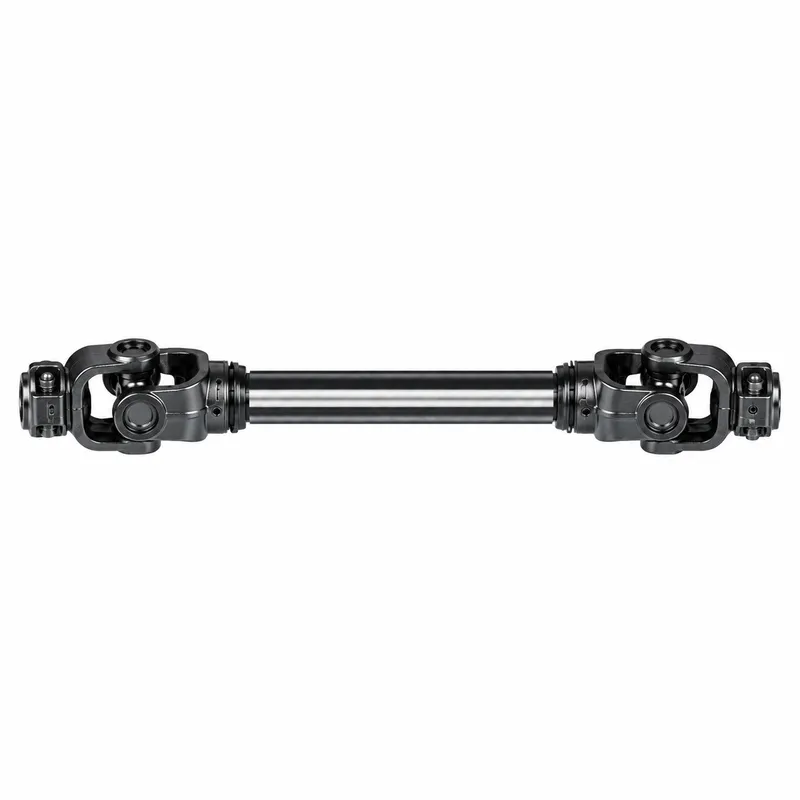
Yes — a PTO shaft can damage a tractor transmission, but only under specific failure conditions: tubes bottoming out and transmitting compressive axial loads into the PTO stub bearing, a seized shaft locking the tractor driveline to a stalled implement, or a catastrophic cross-kit failure allowing the shaft to contact the tractor housing under rotation. A correctly specified and maintained shaft does not transmit harmful loads to the transmission under normal operation.
Failure Mode 1: Tube Bottoming Out — Axial Thrust Load
When the inner tube bottoms out against the outer tube stop at minimum implement height, the shaft becomes a rigid column transmitting compressive axial force from the implement into the tractor PTO stub. The PTO stub bearing — a tapered roller or angular contact bearing in the tractor rear axle housing — is designed to absorb radial loads from the PTO rotation, not sustained axial compressive loads from a bottomed shaft. Repeated bottoming causes premature bearing wear, bearing race damage, and in severe cases, seal failure allowing oil leakage from the rear axle housing.
Failure Mode 2: Implement Stall Transmitted to Tractor Driveline
When an implement jams — a tiller hitting a buried rock, a baler cramming an oversized slug — the sudden stop transmits a severe torque spike back through the PTO shaft into the tractor transmission. Without a torque limiter, this spike can strip gear teeth in the PTO gearbox section of the tractor transmission, damage the PTO clutch pack, or shear the PTO engagement splines. A shear bolt torque limiter set below the shaft peak torque rating prevents this by disconnecting the drive before the spike reaches damaging levels.
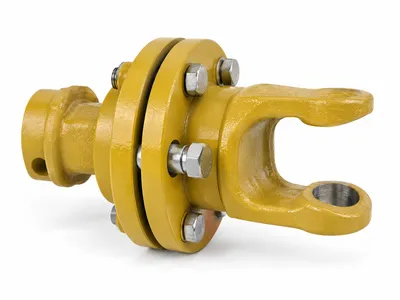
A correctly set torque limiter prevents implement stall loads from reaching the tractor gearbox.
Failure Mode 3: Catastrophic Cross-Kit Failure
A completely failed cross-kit — where the bearing cup has exited the yoke bore or the cross-arm has fractured — allows the shaft to become a flailing unbalanced rotating mass. If the failed joint contacts the tractor rear housing or the implement input housing, the impact can crack cast housings, damage oil seals, and in rare cases fracture mounting points. This failure mode is the most dramatic but also the most preventable: cross-kit wear is detectable by the radial play test months before catastrophic failure occurs.
How to Ensure the PTO Shaft Never Damages Your Transmission
- ✓Fit a torque limiter on all high-risk implements (balers, tillers, mowers, choppers). Set the release torque at or below the shaft peak rating.
- ✓Fit an overrunning clutch on high-inertia implements (drum mowers, balers) to prevent back-drive from the implement into the tractor when PTO is disengaged.
- ✓Verify tube compression clearance before first use: at full implement lowering, tubes must not bottom out, and 80 mm engagement must remain.
- ✓Replace cross kits at first sign of radial play — never operate a shaft with detectable bearing wear.
- ✓Check operating angle at working height — both joints below 25°.
Torque Limiters and Overrunning Clutches — Protect Your Transmission
Shear bolt torque limiters and overrunning clutches for all T Series and L Series spline configurations. MOQ 1 piece.
Tags
can PTO damage transmissionPTO shaft transmission damagePTO torque limiterPTO axial loadimplement stall PTO