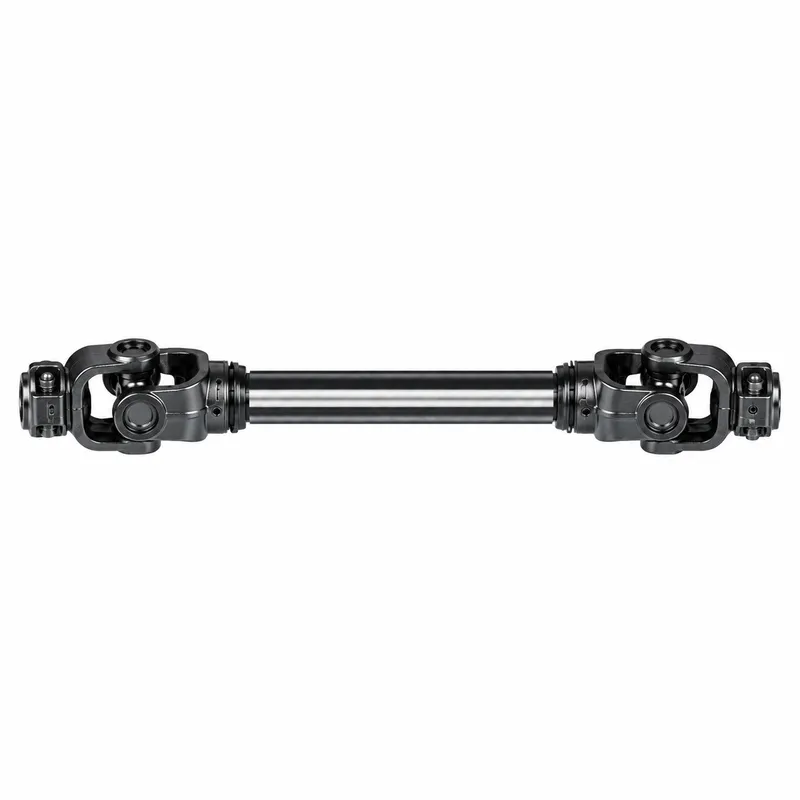
There are four primary types of PTO in agricultural use: independent PTO (the current standard), live PTO (older design), ground-speed PTO (speed proportional to tractor movement), and economy PTO (1,000E — standard RPM at reduced engine speed). Each type has different operational characteristics that determine which implements it can drive and how the operator controls it.
Type 1: Independent PTO — Current Standard
An independent PTO is mechanically isolated from the tractor’s ground drive — the operator can engage and disengage the PTO without affecting the tractor’s forward motion, and can stop the tractor without stopping the PTO. This is the dominant design on all mid-range and large agricultural tractors produced from the 1980s onwards.
Independent PTO is actuated by a separate clutch — either a mechanical dry-plate clutch controlled by a dedicated lever, or a hydraulic wet clutch controlled by a cab switch. The independence from ground drive is the key operational advantage: an operator can stop the tractor to clear a blockage or reposition, then re-engage PTO without losing the implement’s operating speed.
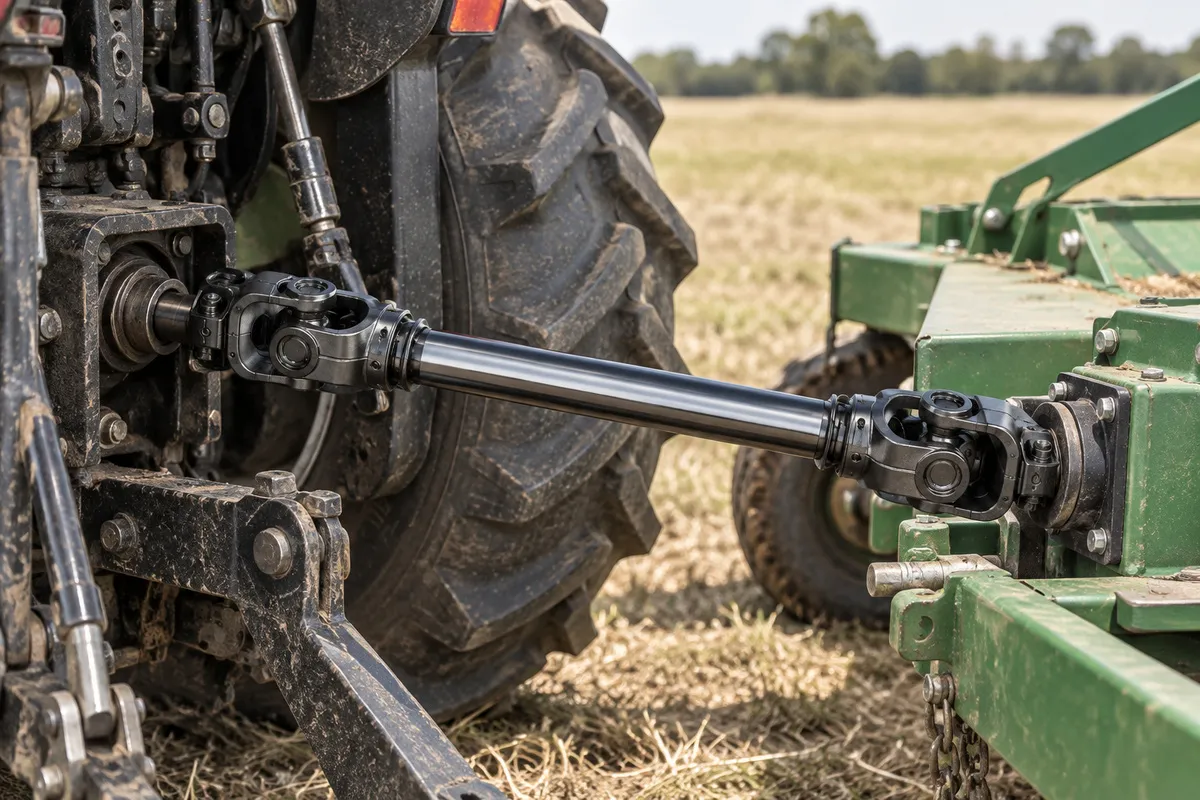
Independent PTO allows the implement to run while the tractor is stationary — essential for balers, choppers, and pumps.
Type 2: Live PTO — Two-Stage Clutch Design
A live PTO uses a two-stage main clutch. The first stage of pedal travel disengages the ground drive; the second stage disengages both the ground drive and the PTO. This allows the operator to stop the tractor (first pedal stage) while keeping the PTO running, then resume ground drive while the PTO continues — but the PTO cannot be independently stopped without stopping the tractor engine. Live PTO was common on tractors produced between the 1950s and 1970s and remains in service on older equipment.
Type 3: Ground-Speed PTO
A ground-speed (or reverse) PTO drives the output shaft at a speed proportional to the tractor’s ground speed rather than at a fixed rpm. As the tractor moves faster, the PTO output speed increases; when the tractor stops, the PTO stops. This configuration is used for implements where the work rate must match the tractor’s travel speed — grain drills where seed metering tracks ground distance, broadcast spreaders where spread width tracks travel speed, and some conveyor-based implements.
Ground-speed PTO is available as a separate stub on some tractors that also provide a standard speed-independent PTO. On tractors with only ground-speed PTO, standard 540 or 1,000 rpm implements cannot be used.
Type 4: Economy PTO (1,000E)
The 1,000E economy PTO delivers 1,000 rpm output at a reduced engine speed — typically 1,400–1,700 rpm engine speed rather than the 1,900–2,200 rpm required for standard 1,000 rpm PTO. This allows large tractors to power high-output implements at rated PTO speed while operating the engine at a more fuel-efficient point on its torque curve. The implement interface is the same Z20 spline as standard 1,000 rpm — no shaft change is required when moving between 1,000 and 1,000E tractors.
Front PTO
Some tractors are equipped with a front PTO — a second PTO stub at the front of the tractor, typically running at 1,000 rpm. Front PTO enables simultaneous front and rear implement operation (a front-mounted mower and rear baler, for example) or allows implements mounted at the front of the tractor to be PTO-driven. Front PTO requires a front-mounted cardan shaft — the سلسلة تي is suitable for front PTO applications in the appropriate torque class.
Rear PTO Types Summary
Independent: Separate clutch — most flexible. Current standard.
Live: Two-stage main clutch — common pre-1980.
Ground-speed: Speed tracks tractor travel. Implement-specific.
Economy 1,000E: 1,000 rpm at reduced engine speed. Z20 spline.
Shaft Compatibility
Standard cardan shafts (T Series, L Series, S Series) are compatible with all PTO types that deliver a fixed 540 or 1,000 rpm output speed.
Ground-speed PTO requires a specific implement design — standard cardan shafts are not used on ground-speed-only tractors for speed-dependent implements.
T Series Shafts Compatible with All Independent PTO Types
T1–T10 for standard 540 and 1,000 rpm independent PTO. Z6 and Z20 spline both in stock. CE certified, ships to Brazil.
Tags
types of PTOindependent PTOlive PTOground speed PTOeconomy PTO1000E PTOPTO types tractor