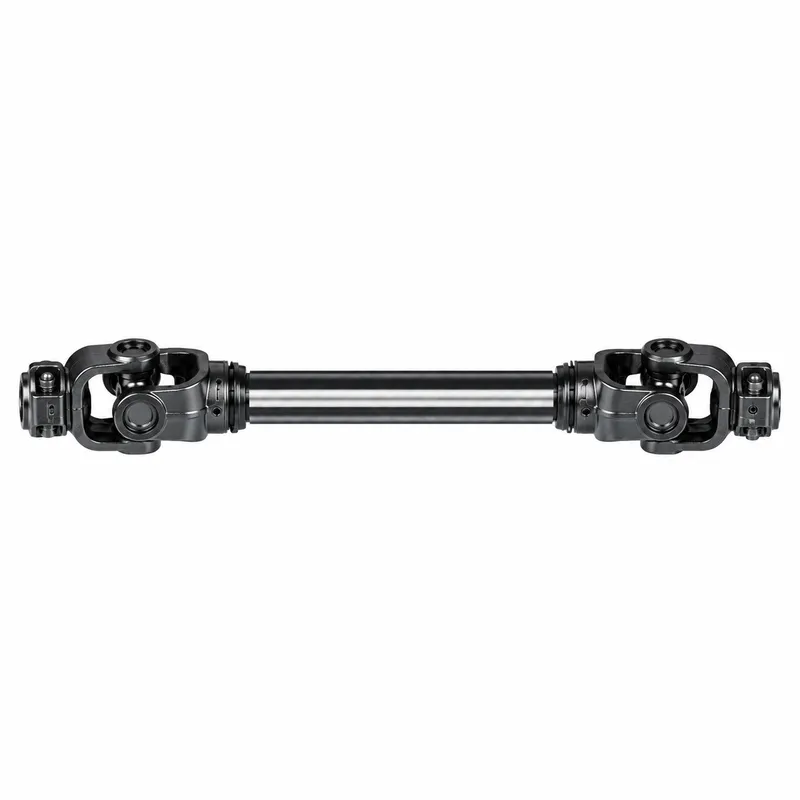
A tractor PTO can be reversed — but not on standard tractors without modification, and not for all applications. Standard agricultural PTO rotation is clockwise when viewed from the rear of the tractor, and virtually all agricultural implements are designed to operate on this standard rotation direction. Reverse PTO capability is available on specific tractor models as a factory or aftermarket option, and is required for certain specialised implements. Understanding when and why reverse PTO is needed clarifies whether it applies to your situation.
Standard PTO Rotation Direction
ISO 500 and ASAE S203 both define the standard agricultural PTO rotation as clockwise when viewed from the implement end of the shaft — that is, from behind the tractor looking forward. This is described as the tractor rotating the shaft toward the operator’s right when standing behind the tractor.
All standard agricultural implements — rotary mowers, balers, tillers, spreaders, irrigation pumps — are designed to accept this clockwise rotation at the input shaft. The implement’s internal gearing converts this input rotation into whatever direction is required for the working components. From the PTO shaft’s perspective, all standard implements use the same rotation direction.
When Is Reverse PTO Used?
Clearing Blockages
The most common practical use for reverse PTO is clearing blockages in implements where material has jammed the working components — typically in balers, forage harvesters, and straw choppers. Running the shaft in reverse for a short period can clear the blockage without requiring manual extraction. This is the most valuable reverse PTO feature for operators running high-throughput harvest equipment.
Specific Implement Requirements
A small number of implement types are designed to operate in reverse PTO rotation. These are typically specialised mixing or processing machines where the direction of the internal working mechanism requires a counter-clockwise PTO input. These implements are always clearly marked with their required rotation direction, and cannot be operated safely on a standard-rotation PTO without modification.
Stubble Management and Specialised Tillage
Some European stubble management implements use reverse PTO rotation to achieve specific soil processing effects that differ from standard forward-rotation tillage. These are implement-specific requirements that will be documented in the implement manual.
Tractor PTO Reverse Systems
Standard tractors do not have built-in PTO reverse capability. Reverse PTO is available as:
- ▸Factory option on specific tractor models — Some European tractor brands (notably Fendt and Claas) offer electronic reverse PTO as a factory option on certain models. The reverse function is activated through the tractor control interface and allows full torque operation in reverse direction.
- ▸Mechanical reverse PTO attachments — Aftermarket bevel gear reversal boxes are available that fit between the tractor PTO stub and the implement shaft. These gearboxes reverse the rotation at the cost of a small power loss and an additional coupling point.
- ▸Hydraulic PTO reversal — Some implement designs use a hydraulic motor at the implement input, allowing electronic reversal of rotation direction from the tractor cab. This is an implement-side solution, not a tractor PTO modification.
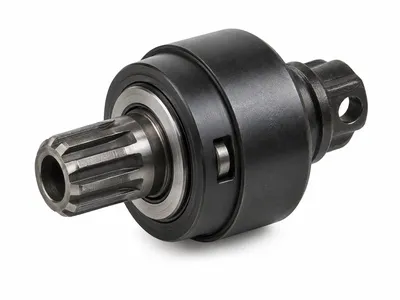
An overrunning clutch prevents back-drive from implement to tractor — different from PTO reversal. Both are implement drive management tools.
The Overrunning Clutch and Back-Drive Prevention
A related concept — often confused with PTO reversal — is back-drive prevention using an overrunning clutch. When a baler or drum mower implement has significant rotational inertia, the implement can continue to drive the PTO shaft after the tractor engine is disengaged or the PTO is switched off. This back-drive effect transmits torque in reverse through the shaft — not a designed reverse rotation, but an uncontrolled one.
An overrunning clutch fitted between the shaft and the implement prevents back-drive by disconnecting the drive path when implement rotational speed exceeds tractor PTO speed. It is a one-way clutch that allows power flow from tractor to implement, but blocks power flow from implement to tractor. This is not the same as reverse PTO — it is a safety device that prevents unwanted reverse torque, not a system for intentionally reversing rotation.
Can You Reverse a PTO Shaft by Reversing the Tractor?
No. The tractor PTO rotation direction is determined by the PTO gearbox internal design, not by the direction the tractor is driving. Driving the tractor in reverse does not reverse the PTO output rotation. The PTO shaft continues to rotate in the same direction regardless of tractor travel direction. The PTO is connected to the engine/transmission power flow, not to the wheel drive path.
T Series PTO Shafts and Rotation Direction
The T Series PTO Drive Shafts from Ever-Power Drive Line are designed for standard clockwise PTO rotation when viewed from the implement end. The cardan joint design is symmetrical — it transmits torque equally in both rotation directions — so a T Series shaft can physically operate in reverse rotation if required for a specific implement. However, the shaft is rated for the same torque in either direction, and the cross-kit bearings are symmetrical. There is no mechanical reason why the shaft cannot be used in a reverse-PTO application.
If your application requires reverse PTO, the shaft selection process (torque, series, length, spline) is identical to standard forward PTO selection. The rotation direction does not change the specification requirements.
Reverse PTO is a tractor feature or an implement-side solution — the PTO shaft itself is mechanically neutral with respect to rotation direction. The cross-kit cardan joint transmits torque equally in both directions.
— Ever-Power Drive Line Engineering Notes
Questions About Reverse PTO Shaft Applications?
The Ever-Power Drive Line technical team can advise on shaft selection for specialised reverse-PTO and back-drive applications. Contact us with your implement specification.
Tags
reverse PTOPTO rotation directionPTO back-driveoverrunning clutchtractor PTO reversalPTO shaft directionagricultural PTO