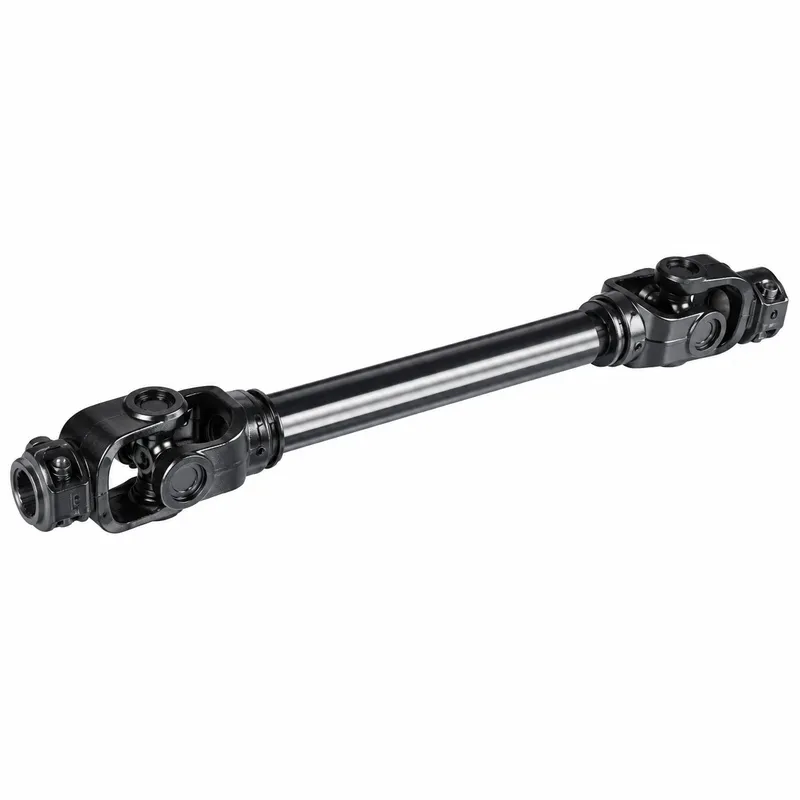
A PTO shaft — Power Take-Off shaft — is a rotating mechanical driveshaft that connects the power output of a tractor to an external implement such as a baler, mower, tiller, or irrigation pump. It transmits torque from the tractor’s engine through a standardised coupling interface, allowing the implement to be powered directly by the tractor without any separate engine of its own. The PTO shaft is the reason a single tractor can drive dozens of different implements interchangeably.
The standard agricultural PTO shaft is a telescoping cardan shaft: two universal joints connected by a sliding tube assembly. T Series (triangular tube), L Series (lemon tube), and S Series (star tube) are the three tube profiles available from Ever-Power Drive Line, covering all common implement input housing specifications from 210 Nm to 1,905 Nm at 540 rpm.
The Physical Components of a PTO Shaft
From the outside, a PTO shaft looks like a yellow corrugated cylinder — that is the CE safety shield, a UV-stabilised HDPE guard that encloses the rotating assembly. The shield does not rotate; it is anchored by safety chains at both ends to prevent entanglement. Inside the shield are eight primary components working together to transmit power continuously while the implement rises, falls, and changes angle relative to the tractor.
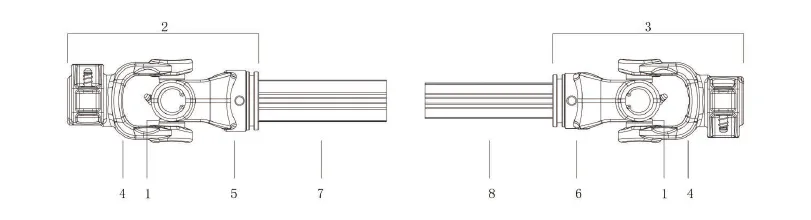
From left to right: cross joint (1), joint simples (2,3), splined yoke (4), tube yokes (5,6), outer and inner tubes (7,8).
How the PTO Shaft Fits into the Power Train
The tractor engine drives the transmission. The transmission includes a PTO gearbox that delivers a fixed output speed — 540 rpm or 1,000 rpm — regardless of the tractor’s road speed or gear selection. The PTO stub is the short rotating shaft that protrudes from the rear of the tractor gearbox housing. The PTO shaft connects this stub to the implement input shaft, completing the power path from engine to working components.
The telescoping tube allows the shaft to lengthen and shorten as the implement rises and falls on the three-point linkage. The two cardan joints — one at each end of the telescoping section — allow the shaft to transmit power through the changing angle between the tractor and implement without velocity variation, provided both joints are phased correctly and operate below 25 degrees.
What Types of Implements Does a PTO Shaft Drive?
Field Crop Implements
Rotary tillers, seeders, spreaders, sprayers, rotary mowers, disc mowers, tedders, rakes
Harvesting Implements
Round balers, square balers, forage harvesters, forage wagons, combine feeder drives
Utility Applications
Irrigation pumps, generators, hydraulic pumps, wood chippers, cement mixers, auger drives
T Series, L Series, and S Series — Which PTO Shaft?
The three tube profiles are not interchangeable. The implement input housing determines which tube profile is required. Triangular-tube T Series fits the majority of standard agricultural implements. Lemon-tube L Series fits European OEM compact baler and tiller housings that exclude the triangular tube. Star-tube S Series fits European OEM housings machined for the six-lobe star bore. Always confirm the tube profile requirement from the implement manual before ordering.
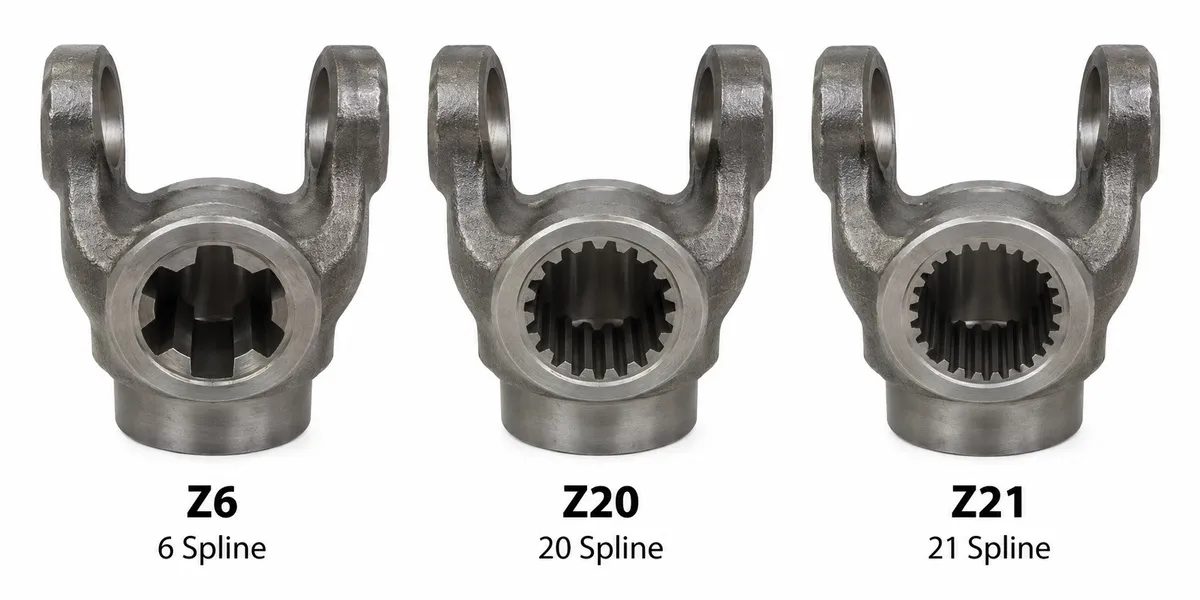
The splined yoke bore (Z6 or Z20) must match the tractor PTO stub. The tube profile must match the implement housing.
Browse the Full T Series, L Series, and S Series Range
T1–T10, L1–L32, S6–S42. CE certified, IP67 sealed, HDPE shield standard. MOQ 1 pc. Ships to Brazil.
Tags
what is PTO shaftPTO shaft definitionPTO shaft explainedagricultural PTO shaftcardan shaft PTO