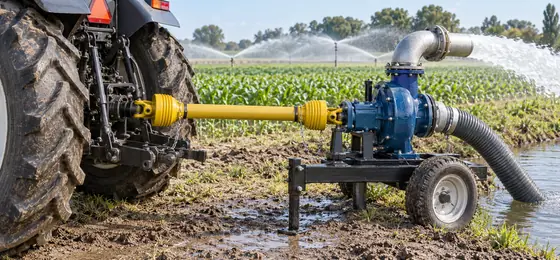
Yes — a PTO shaft can power hydraulic systems by driving a hydraulic pump that converts the PTO’s rotational power into hydraulic flow and pressure. This is a common configuration on agricultural implements, construction equipment, and utility vehicles where hydraulic functions are needed beyond the capacity of the tractor’s own hydraulic system. The PTO-driven pump operates as a separate, independent hydraulic power source.
How a PTO-Driven Hydraulic System Works
The PTO shaft connects the tractor PTO stub to the input shaft of a hydraulic pump mounted on the implement or on a standalone pump unit. As the PTO shaft rotates, it drives the pump’s impeller or gear set. The rotating pump draws hydraulic oil from a reservoir and pressurises it to the required system pressure (typically 150–350 bar for agricultural systems). This pressurised oil is then directed through control valves to hydraulic cylinders, hydraulic motors, or both.
The hydraulic output can power any function that hydraulic systems normally perform: cylinder extension and retraction (boom lift, wing folding, header height), hydraulic motor rotation (conveyor drives, fan drives, steering), or both simultaneously through a hydraulic circuit with multiple actuators.
Why Use PTO-Driven Hydraulics Instead of Tractor Hydraulics?
- ✓Capacity: The tractor’s own hydraulic system has a fixed flow rate and pressure rating. Large implements may require more hydraulic flow than the tractor system can supply. A dedicated PTO-driven pump provides additional capacity.
- ✓Independence: A PTO-driven pump operates on its own hydraulic circuit with its own oil reservoir, filter, and pressure relief valve. This isolates the implement hydraulics from the tractor system, preventing contamination transfer and pressure interference.
- ✓Portability: A PTO-driven pump unit can move from tractor to tractor, providing hydraulic power to any tractor that has a PTO stub — regardless of whether that tractor has a high-capacity hydraulic system.
- ✓Continuous duty: Some implements require hydraulic flow continuously over long periods. A dedicated PTO-driven pump is sized specifically for this duty cycle.
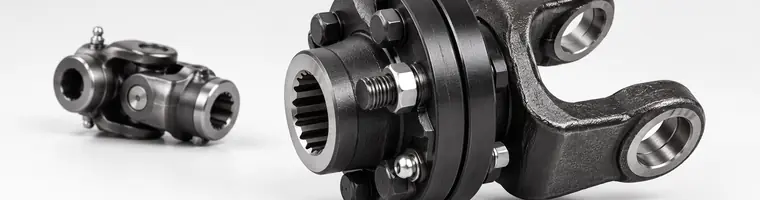
An overrunning clutch prevents hydraulic pump back-drive into the tractor PTO when the engine is disengaged.
Efficiency Consideration: PTO vs Direct Hydraulic Drive
Using the PTO to drive a hydraulic pump, then using that hydraulic output to drive a hydraulic motor, has lower overall efficiency than direct PTO-to-implement shaft drive. The power path is: engine → PTO shaft (95% efficient) → hydraulic pump (85–90% efficient) → hydraulic motor (85–90% efficient) → implement working mechanism. Combined efficiency: approximately 70–75%. For direct PTO drive the path is: engine → PTO shaft (95% efficient) → implement gearbox (95% efficient). Combined: approximately 90%.
This efficiency difference matters for continuous high-power applications such as forage harvesting. For low-duty or intermittent hydraulic functions (boom folding, header raise/lower), the efficiency difference is small in practice and the convenience of hydraulic actuation justifies the power loss.
PTO Shaft Selection for Hydraulic Pump Drive
The shaft selection for a PTO-driven hydraulic pump follows the same torque calculation as any other PTO application: pump input power (kW) × 9,549 ÷ PTO speed (rpm) + 20% safety margin = minimum shaft Nm rating. For continuous-duty pump applications, the 4-hour greasing interval applies (rather than the standard 8-hour) due to the extended running time. Sealed IP67 cross-kit bearings in the T-serie and S-serie shafts provide the best service life in pump drive duty.
Overrunning Clutch for Pump Applications
Hydraulic pumps with significant flywheel inertia can back-drive the tractor PTO when the engine is disengaged, preventing the shaft from decelerating at a safe rate. An overrunning clutch between the shaft and pump input prevents back-drive and allows safe PTO disengagement.
T Series and S Series for Hydraulic Pump PTO Drive
IP67 sealed cross-kit bearings for extended pump duty cycle. All models available with Z6 (540 rpm) or Z20 (1,000 rpm) spline. MOQ 1 pc.
Tags
PTO power hydraulic systemsPTO hydraulic pumpPTO driven hydraulichydraulic pump PTO shaftPTO hydraulics agricultural